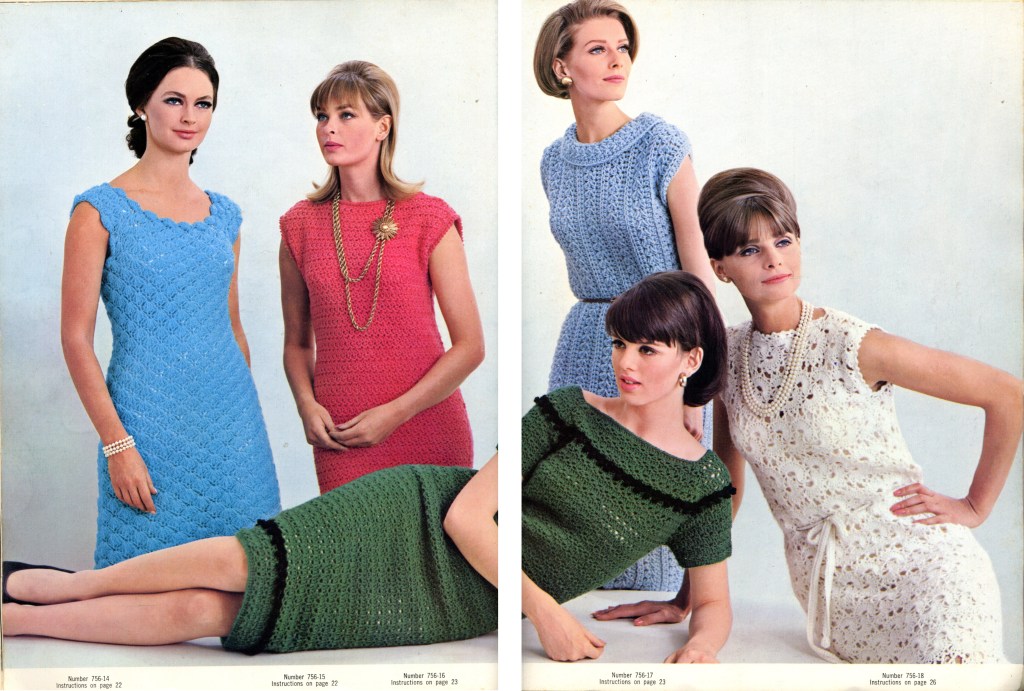
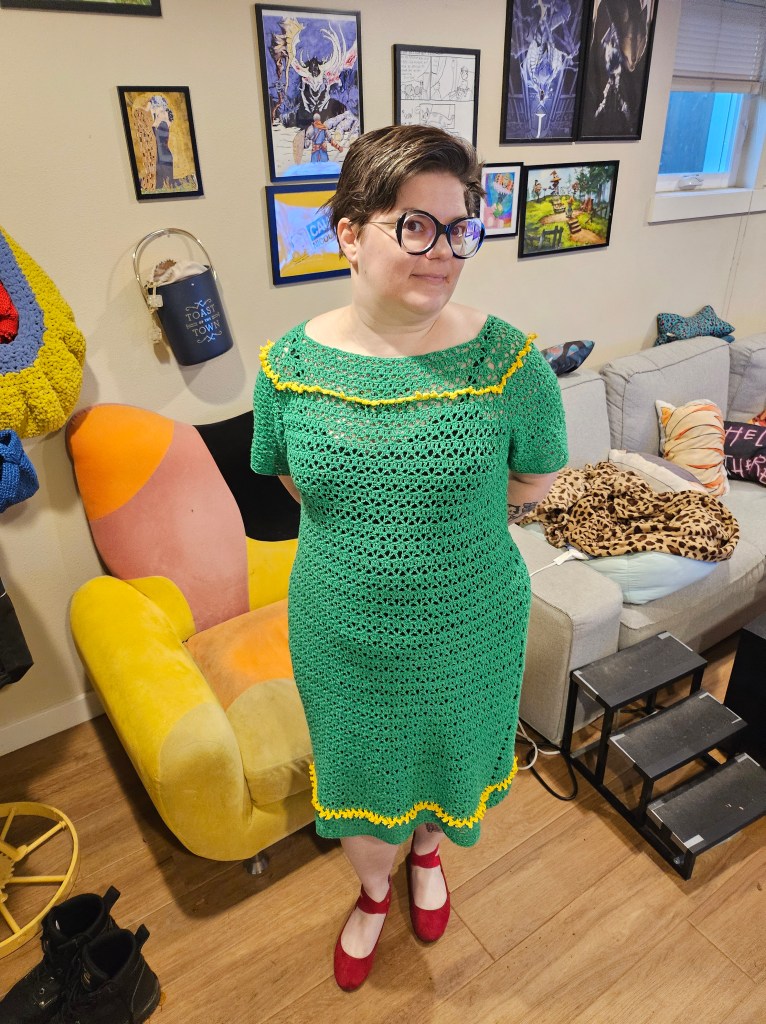
Let’s Make a Little Adjustment to this 1960s Green Dress

(PDF with all five dresses)

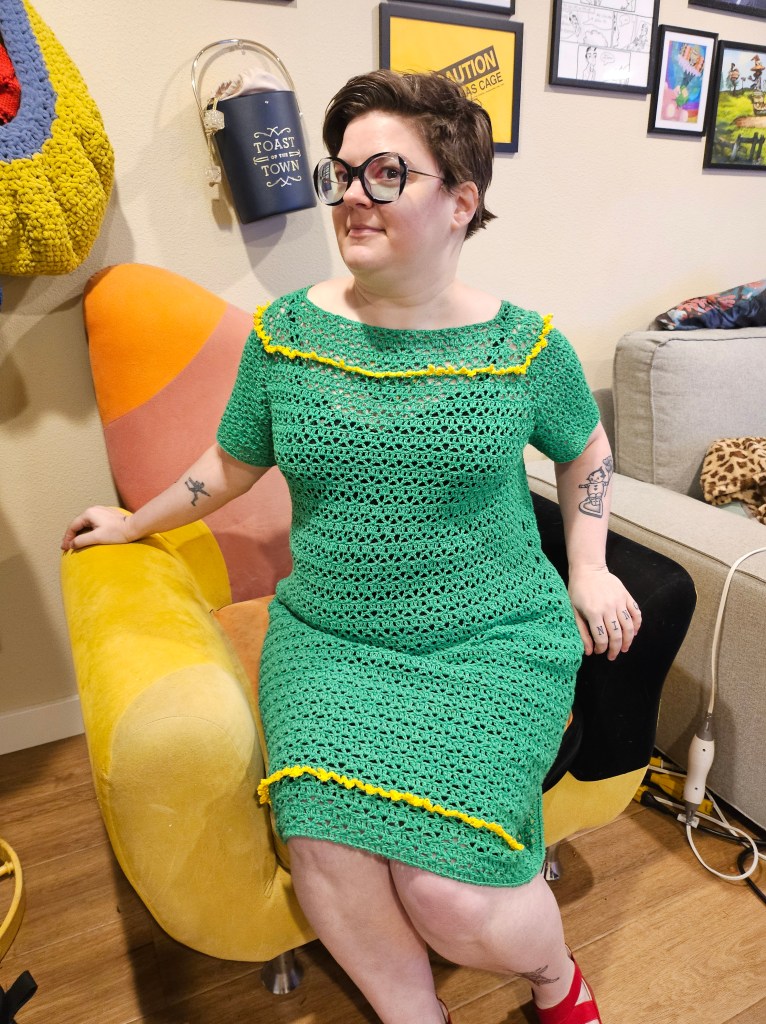
The green dress in the 18-20 size (the size I made), is designed to be 41″ around when sewn together. Size 18-20 in the 1960s meant any bust between 38-40 inches and hips between 40-42 inches. So, the top part of the dress fits me fine as designed. But the part around my hips needed to be increased by several inches to both get around my hips and also have the same ease as the rest of the garment. Using the provided gauge (9 DC = 2 inches), I created this increase and decrease so that I could create the needed hip space and then bring the dress back to the original measurements where they were needed.

I completed all of my increases on the back piece, which worked just fine but did cause the side seam to curve some. If you want your seams straight, split the increases equally between the front and the back and make sure to do them on the same rows.

To increase where needed on the green dress, do as follows:

  1. On a double crochet row (Row 3 repeat): DC in joined DC. DC 4 times in ch 2 space. Each increase will add approximately 1/2″ to the garment width. Space increases evenly.
  2. On the next row, complete all joined DCs as usual. You will have an extra DC for each 2 stitches you added.

To decrease, do as follows:
When completing a joined DC, skip 4 DC (instead of 2) for each increase you completed earlier. You do not have to put decreases on top of increases.

It is best to complete an increase or a decrease, then work two rows even for smooth shaping.

For the trim:

Join yarn in any DC on the same row indicated for the ball trim. SC around the DC post. ch 2. Complete a picot (ch 3, ss back into first chain of the 3). Ch 2. Skip next DC, SC around following DC. Repeat around.
Quality Vintage Shit: Knee Warmers

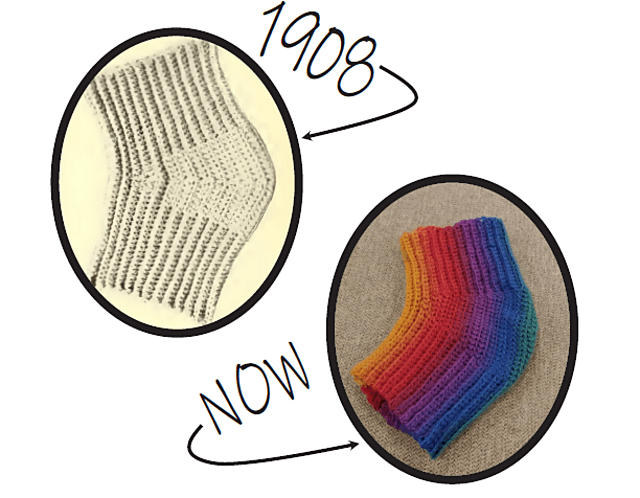
An absolutely wonderful find in a 1912 crochet book: Knee warmers (aka knee caps)! I did a little work and got the pattern written in modern terms, so if you need some knee cozies, I’ve got you covered!

Pattern is available free on ravelry and includes instructions for sizing up from the original. You’ll need fingering weight yarn, a 3.5 mm hook, and a willingness to do a lot of back and front loop stitches.

Vintage Pattern Fail

Well, shit.

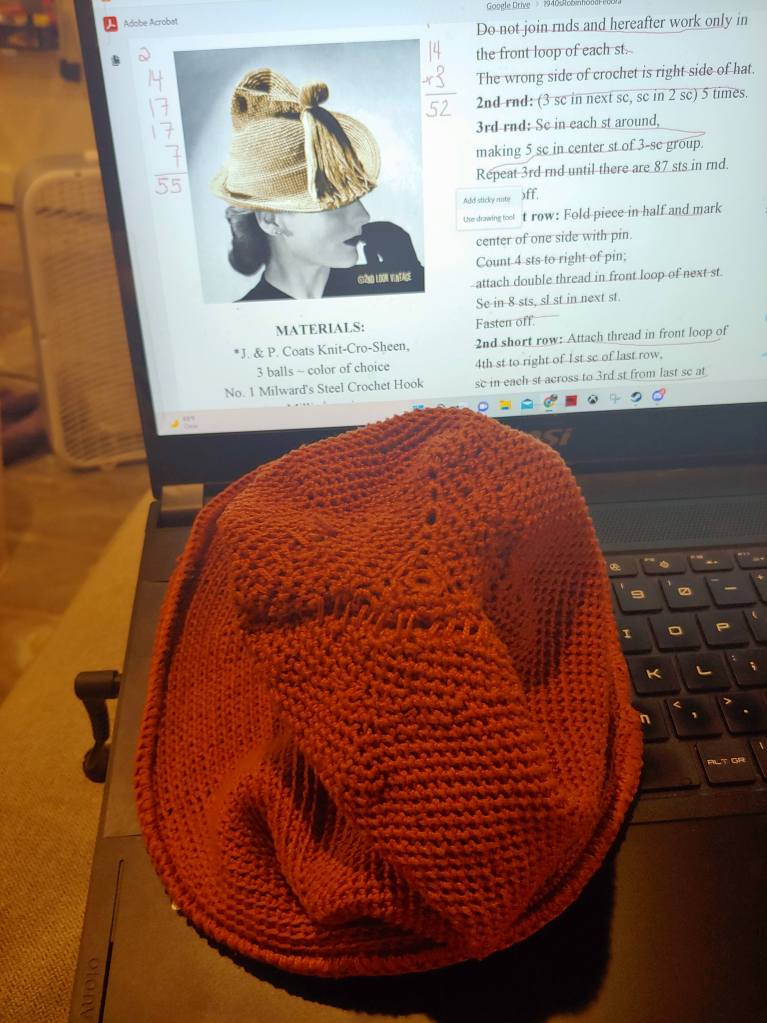
I’ve got more hair than they did in the 1940s, apparently. And that’s with most of it shaved clean off. It’s a shame. It’s a very clever pattern, and the hat really is lovely. (You can grab the pattern here. [I do not make any cash if you buy it.])

But sometimes you take a chance, and it doesn’t work. That’s okay. I got to practice short rows (ugh) and the overall build on the hat was interesting and fun.

A few notes to help you out:

  • You need a #10 crochet thread. You’re gonna double-strand it. You’ll need 575 yards. I used Knitpicks Curio.
  • The pattern calls for a #1 Steel Crochet Hook. That can either be a 2.25mm or a 2.75mm. I used a 2.75, and it was still too small, but my stitches looked fantastic, so definitely go with that.
  • There’s a very good spot in the pattern to add more increases. You do a series of them after the short rows. Then, the pattern says to work even for 4 inches. Just add more increases in the early rows of the 4 inches. I don’t think the overall structure of the hat will be impacted by doing that.
  • There’s milliner wire in the edge of the brim. I used 1.5mm, and it was too thick. I don’t suggest going above 1mm.
  • I am not the person to tell you how to sew the tuck (you can see my very questionable sewing in the photo). However, if anyone’s got tips, I would happily take them.

Lastly, and hilariously, this is the first vintage pattern I’ve used in awhile that did not have a single errata (Check out the Vintage Pattern Errata Page for ones I’ve tracked down so far). So, well done lovely hat! I will eventually try this one again, but for now, I’m happy to put aside the thread and tackle something else.